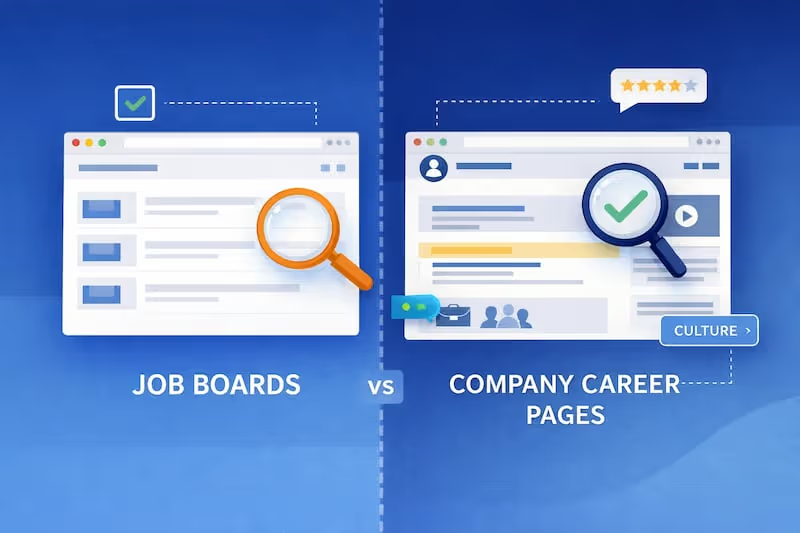
Job boards are useful for discovering opportunities quickly. But before applying, it is often worth visiting the company’s own career page.
A career page can reveal much more than a list of open roles. It can show how a company presents its culture, structures its hiring, and communicates with candidates. For students, early professionals, and experienced hires alike, learning how to read a career page more carefully can lead to better decisions.
GoToCareer was built around this idea: helping people explore company career pages with more context, across industries, employer types, and groups.
Why career pages matter
A company career page is not just a place to apply. In many cases, it is also one of the clearest windows into how an employer wants to be seen.
Some companies use career pages simply to publish vacancies. Others use them to explain teams, values, growth paths, locations, and what it may feel like to work there. That difference matters, especially when comparing employers that may look similar at first glance.
Before applying, it is worth asking not only what roles are open, but also what kind of employer is behind them.
1. Look at the clarity of roles and hiring paths
One of the first things to assess is how clearly the company organizes its opportunities.
A strong career page usually makes it easy to understand:
- what kinds of roles exist
- how jobs are grouped by function or location
- whether there are dedicated paths for students, graduates, or experienced hires
- how easily you can move from exploration to application
When roles are presented clearly, the company often feels more structured and easier to evaluate. If the page feels confusing, overly fragmented, or difficult to navigate, that may suggest recruiting communication is not yet a strong priority.
2. Pay attention to culture and work environment signals
Career pages often contain subtle but useful clues about what it may feel like to work at a company.
These signals do not come only from formal culture statements. They also come from tone of voice, employee stories, team pages, imagery, and the kind of workplace messages the company chooses to emphasize.
Ask yourself:
- does the company sound fast-paced, analytical, creative, mission-driven, or highly performance-oriented?
- does the language feel concrete, or mostly generic?
- are there real examples of teams, people, or ways of working?
Some companies communicate these aspects with clarity. Others stay more polished and generic. The more specific the signals, the easier it becomes to evaluate fit.
3. Evaluate the candidate experience before applying
A career page can also tell you a lot about the application experience.
There are a few simple signs worth checking:
- does the company explain its hiring process?
- are job descriptions clear and informative?
- does the page reduce confusion or create it?
- is the journey from role discovery to application easy to follow?
Candidate experience often starts before any application is submitted. If a company is thoughtful about how it presents information, structures the process, and guides users through it, that can be a positive signal.
4. Notice the level of employer brand maturity
Not all employers invest in their career pages in the same way.
For some companies, the career page is mainly transactional: open roles, filters, apply button. For others, it is a more developed employer-brand asset that helps candidates understand identity, culture, teams, and reasons to join.
This does not automatically mean that a more polished page reflects a better workplace. But it can show that the company is clearer about how it wants to attract talent and communicate with candidates.
When you compare multiple career pages across industries, these differences become easier to spot.
5. Look for evidence, not just polished language
Many career pages use strong branding language. That is normal. The important question is whether the page offers anything meaningful behind the messaging.
Look for substance:
- real examples of teams or programs
- employee perspectives that feel specific
- clear information on functions, locations, or development paths
- content that goes beyond slogans
The more evidence a company provides, the easier it is to form a grounded impression.
A better way to approach career research
A job board can help you discover openings. A company career page can help you understand the employer behind them.
That is why both can be useful, but they do not serve the same purpose.
Before applying, it is worth slowing down and asking a few better questions:
- How clearly does this company present its opportunities?
- What does its career page suggest about culture and working style?
- Does the employer communicate with substance or only with polished language?
- What does the overall candidate journey already tell me?
The more carefully you read a career page, the more informed your decisions become.
Explore company career pages on GoToCareer
GoToCareer helps users explore company career pages by industry, sub-industry, and group — making it easier to compare employers and understand how different organizations present career opportunities.